A well-built stone retaining wall does more than hold back soil. It protects your property from erosion, creates usable yard space on a sloped lot, and can add real curb appeal to your home. But not all retaining walls are created equal, and here in Northeast Indiana, local soil conditions and climate play a bigger role in your project's success than most homeowners realize.
Whether you're managing a sloped backyard in Columbia City, stopping erosion along a pond bank in Whitley County, or stabilizing a hillside near Fort Wayne, this guide walks you through everything you need to know before the first stone goes in the ground.
- Why Retaining Walls Matter in Northeast Indiana
- Types of Stone Retaining Walls
- What Does a Retaining Wall Cost in Indiana?
- Indiana Permit Requirements
- Drainage: The Make-or-Break Factor
- Before Work Starts: Call 811
- How to Choose a Retaining Wall Contractor
- Signs You May Already Need a Retaining Wall
Why Retaining Walls Matter in Northeast Indiana
Northeast Indiana is mostly flat, but plenty of properties in the region sit on rolling terrain, alongside drainage ditches, near pond banks, or at the edge of land that drops sharply from one level to the next. In those situations, uncontrolled soil movement is a real and costly problem.
What makes this area particularly challenging is the soil. Much of Northeast Indiana sits on heavy clay, a soil type that holds water longer than sandy or loamy alternatives. After a heavy spring rain, that saturated clay exerts significant pressure on whatever is holding it back. A wall that wasn't designed with drainage in mind will feel that pressure building season after season, until something gives.
Indiana winters compound the problem. The freeze-thaw cycle that runs through every winter here causes soil to expand and contract repeatedly. Walls that aren't built on proper footings or don't account for ground movement will show signs of failure within just a few years, often long before a homeowner realizes there's a structural issue developing.
A properly designed stone retaining wall addresses all of this. It holds soil in place, manages water runoff, protects your foundation and yard from erosion, and when done right, requires virtually no maintenance for decades.
Types of Stone Retaining Walls
Stone is one of the most durable and visually appealing materials for retaining walls. Unlike wood, which eventually rots, or vinyl, which can warp under heavy soil loads, natural stone and stone-faced walls hold up exceptionally well through Indiana winters. According to HomeGuide's 2026 cost data, stone retaining walls typically last 40 to 100 years when properly constructed. Here are the most common types you'll encounter in this area:
Dry-Stack Stone Walls
Dry-stacked walls are built without mortar. Stones interlock through weight, friction, and careful placement, creating a structure that's surprisingly strong while remaining flexible enough to handle minor ground movement. Because gaps exist between the stones, water drains naturally through the wall, which actually reduces pressure buildup. These walls work well for garden terracing, slopes under four feet, and properties where a natural, rustic look is the goal. They're also typically the most affordable stone option.
Mortared Fieldstone Walls
Fieldstone refers to naturally occurring rocks that can be found across the Northeast Indiana landscape, things like sandstone, limestone, and granite. Mortared fieldstone walls are more rigid than dry-stack and better suited for heavier soil loads or taller applications. They have a rugged, classic look that fits well on rural and semi-rural properties throughout the region.
Limestone Block Walls
Cut limestone blocks are a popular choice for more structured retaining walls. They're consistent in size, very strong, and give a clean finished appearance. Limestone holds up well in Indiana's climate and is commonly used for everything from residential landscaping to larger-scale site preparation work. It's also one of the more locally available stone types in the area, which can help reduce material delivery costs.
Stone Veneer Over Concrete Block
For homeowners who want the appearance of natural stone without paying full natural-stone prices, a concrete block wall with stone veneer on the exterior is a practical middle-ground option. The concrete block handles the structural load, while the stone face provides the aesthetic appeal. This approach is especially common for front-yard walls and high-visibility retaining structures where appearance matters as much as function.
Gabion Walls
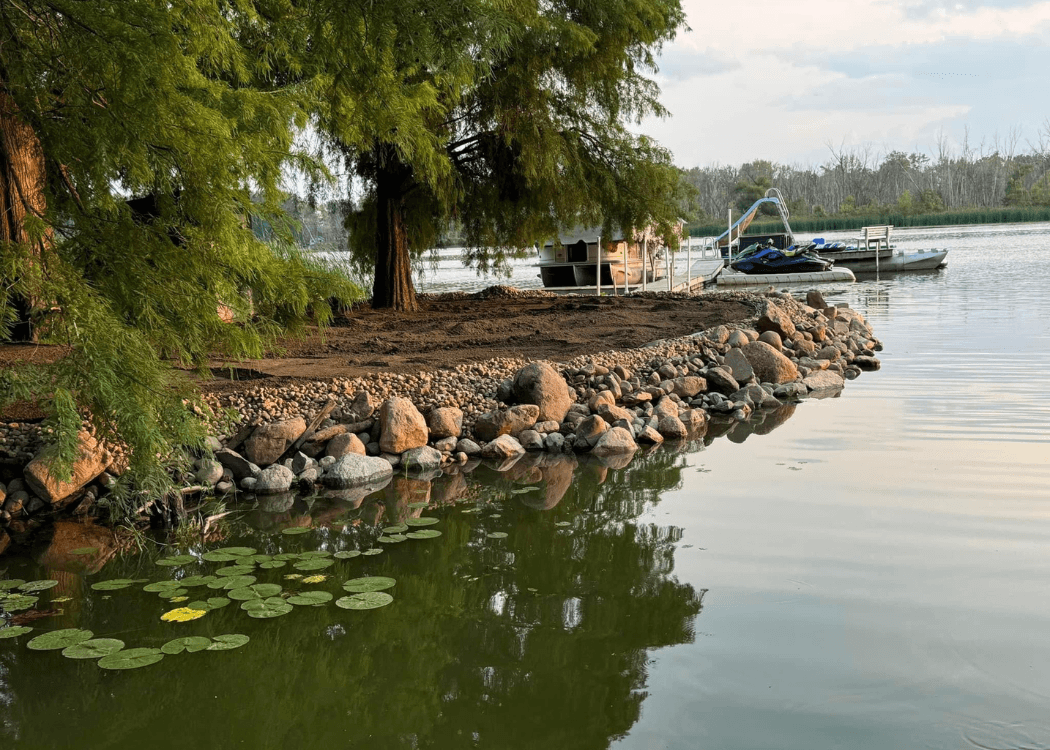
Gabion walls use wire mesh baskets filled with rocks or crushed stone. They're most commonly used along pond banks, drainage ditches, and steep embankments where erosion control is the primary goal. They require no concrete footer, shift naturally with the land, and are very effective at managing water. They're one of the more budget-friendly options and one of our go-to solutions for lakefront and drainage applications here in Northeast Indiana.
DZ Contracting stone and site work project, Northeast Indiana. Results vary by project scope and site conditions.
What Does a Retaining Wall Cost in Indiana?
Cost is almost always the first question homeowners ask, and the honest answer is: it depends. Wall height, length, stone type, site access, and whether drainage work is needed all impact the final number. That said, here are realistic 2026 cost ranges for Indiana projects, based on data from HomeGuide and Angi, adjusted for the Northeast Indiana market:
| Wall Type | Cost Per Sq Ft (Installed) | Estimated Lifespan |
|---|---|---|
| Dry-Stack Stone | $20 – $85 | 40–100 years |
| Mortared Fieldstone | $20 – $80 | 50–100 years |
| Limestone Block | $25 – $70 | 50–100 years |
| Stone Veneer / Concrete Block | $30 – $80 | 40–75 years |
| Gabion (wire mesh + rock fill) | $10 – $40 | 10–75 years |
For most residential projects in Northeast Indiana, homeowners spend somewhere between $3,500 and $10,000. Smaller garden walls on straightforward sites may come in under $2,000. Larger walls on steep or difficult terrain, or projects that include a drainage system, gravel backfill, or footer installation, can exceed $12,000.
What Drives the Cost Up
A few factors can push your project toward the higher end of the range:
- Wall height over four feet — requires deeper footings, reinforcement, and engineering sign-off
- Clay-heavy soil or poor drainage — additional excavation, gravel backfill, and drain tile may be needed
- Difficult site access — limits equipment, increases labor time
- Removal of an existing failing wall — demolition and disposal add to the overall cost
- Custom design elements — curves, steps, or integrated landscaping features all take more labor
Pro tip: Most retaining wall contractors have a minimum project cost of $1,500 to $3,000. If you're getting quotes significantly below that range, ask exactly what's included, especially when it comes to drainage and foundation prep.
Indiana Permit Requirements
In most Indiana municipalities, a building permit is required for any retaining wall over three to four feet tall. The exact threshold varies by county and city, so it's always worth checking with your local building department before the project starts. Walls above the height limit also typically require a structural engineer's design to ensure the wall can safely handle the soil pressure behind it. Engineering fees generally run $500 to $2,000 depending on project complexity.
A reputable contractor will know the local permitting requirements in their service area and handle the permit application as part of your project. If a contractor tells you that permits aren't necessary for a taller wall, that's a red flag worth taking seriously.
Drainage: The Make-or-Break Factor
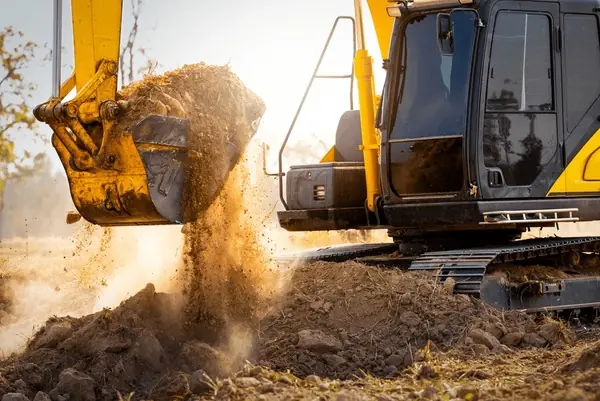
Proper excavation and site preparation are the foundation of any lasting retaining wall project.
If there's one thing that separates a 50-year wall from one that fails in five years, it's drainage. Every retaining wall holds back not just soil but the water moving through it. When that water has nowhere to go, it builds up behind the wall and eventually forces its way through, over, or around it.
In Northeast Indiana, drainage is especially critical because of clay soil. Clay doesn't allow water to pass through quickly, so it tends to pool and build pressure behind a wall. A good drainage plan typically involves gravel backfill directly behind the wall, weep holes or perforated drain pipe at the base, and proper sloping of the site to direct surface water away from the wall face.
Any contractor you hire should have a clear plan for drainage before they quote the project. If they don't mention it, bring it up yourself. The cost to add proper drainage during construction is minimal compared to the cost of rebuilding a wall that failed because water wasn't managed correctly.
Before Work Starts: Call 811
Any retaining wall project that requires excavation or digging requires a call to Indiana 811 at least two full business days before work begins. This is required by Indiana law under Indiana Code 8-1-26. Utility crews will mark the location of underground lines at no cost to you, preventing accidental damage to gas, water, electric, or sewer lines during excavation. DZ Contracting handles this step as a standard part of every project, but it's good to know the requirement if you're managing the job yourself.
How to Choose a Retaining Wall Contractor in Northeast Indiana
The gap between a wall that lasts 50 years and one that fails in five usually comes down to who built it and how they handled drainage and foundation prep. Here's what to look for when getting quotes:
- Excavation and stone work under one roof. Retaining walls involve real site work — grading, excavation, drainage, footings. A contractor who handles all of it is better positioned to get it right than one who subs out pieces of the job.
- A clear drainage plan included in the quote. If drainage isn't mentioned, ask. And if a contractor can't explain how they'll manage water behind the wall, keep looking.
- Local experience. A contractor who works in Northeast Indiana regularly knows the clay soil, the freeze-thaw cycles, and the permitting requirements in your area. That knowledge matters.
- Detailed, itemized estimate. Your quote should break out materials, labor, drainage, and site prep. Vague lump-sum quotes make it hard to compare contractors and leave room for unexpected charges later.
- Licensed, insured, and permit-ready. For any wall that requires a permit, confirm your contractor will pull it and that their insurance is current.
Red Flags to Watch For
- Unusually low quote that doesn't include drainage or footer work
- Request for large upfront cash payment before work begins
- Unable to provide proof of insurance or contractor license
- No mention of permits for taller walls
- No site visit before quoting — retaining wall projects need to be assessed in person
DZ Contracting has built a reputation for honest estimates and quality site work throughout Northeast Indiana. If you want to see examples of our work or learn more about our full range of excavation and site services, we're happy to walk you through what we've done in your area.
Signs You May Already Need a Retaining Wall
If you're not sure whether a retaining wall is the right solution for your property, watch for these signs that soil movement is already becoming a problem:
- Soil washing or sliding downhill after heavy rain events
- A sloped yard that's difficult or impossible to mow and use
- Erosion along a pond bank, drainage ditch, or low-lying area
- An existing wall that's leaning, cracking, pulling away from the soil, or showing gaps
- Water pooling near your home's foundation after rain
- Uneven or sunken areas in your yard that weren't there before
Catching erosion and soil movement early almost always costs less than addressing it after significant movement has already occurred. If you're seeing any of these signs, a site evaluation is a smart first step before the problem gets worse heading into the next heavy rain season.