Hiring an excavation contractor is not like hiring someone to mow your lawn. The stakes are higher, the equipment is heavier, the costs are real, and the consequences of a bad job — a foundation that's off-grade, a trench that collapses, a septic line that wasn't properly bedded — can follow a property for years. If you're a homeowner or property owner in Warsaw or Kosciusko County thinking about an excavation or demolition project, this guide is written for you.
Kosciusko County has seen consistent residential and rural development over the past decade, which means excavation contractors are in demand. That demand is a good thing for competition, but it also means the market includes contractors of very different quality levels. Knowing what questions to ask, what a fair price looks like, and what separates a professional job from a sloppy one puts you in a much stronger position before anyone starts moving dirt on your property.
- What Excavation and Demolition Actually Covers
- Common Projects in Warsaw and Kosciusko County
- What Does Excavation Cost in Indiana?
- Permits and Indiana Requirements
- Call 811 Before Anyone Digs
- Questions to Ask Before You Hire
- Red Flags That Cost You Later
- DZ Contracting in Warsaw and Kosciusko County
What Excavation and Demolition Actually Covers
People use the word "excavation" loosely, but it covers a wide range of site work. Understanding the scope helps you know what you're hiring for — and whether a contractor is actually qualified to do all of it.
Excavation
At its core, excavation is the movement of earth — digging, grading, trenching, and shaping a site to meet a project's requirements. Excavation work includes foundation digging for new construction, basement dig-outs, trenching for utilities and drain lines, pond construction, building pad preparation, and driveway grading. The right contractor will have the proper equipment for each type of job, from a small rubber-track mini-excavator for tight residential spaces to a full-size machine for large site clearing or pond work.
Demolition
Demolition is the controlled removal of a structure or part of one. On residential properties in the Warsaw area, this commonly means removing old outbuildings, garages, barns, or concrete slabs before new construction begins. It can also include removing an old septic system, underground tanks, or failed retaining structures. Demolition and excavation often go hand in hand — a contractor who handles both is usually the more efficient choice, since the same equipment and crew that demo a structure can also clear and grade the site in one mobilization.
Related Site Work
Many excavation contractors in this area also handle work that's adjacent to straight excavation: septic system installation and repair, drain tile, erosion control, land clearing, and gravel driveway installation. DZ Contracting handles all of this as part of its excavation and demolition services in the Warsaw and Kosciusko County area.
Common Projects in Warsaw and Kosciusko County
Kosciusko County's mix of lake properties, rural acreage, and small-town residential lots creates a distinct set of excavation needs. Here are the project types we most commonly handle in this area:
- New home site preparation. Clearing, grading, and foundation excavation for new residential construction throughout the county.
- Septic system installation and replacement. Many properties in rural Kosciusko County are on private septic. New systems, failing system replacements, and system upgrades are among the most common excavation-related calls we get in this area. Learn more about our septic services.
- Pond construction and pond bank repair. Lake and pond properties are abundant in Kosciusko County, and shoreline erosion and pond bank stabilization are recurring needs.
- Demolition of outbuildings and old structures. Old barns, sheds, and concrete slabs that need to come down before new construction or property cleanup.
- Gravel driveway installation and repair. Rural properties and lakefront lots often need long gravel drives built or regraded after seasonal wear.
- Building pad and site prep for pole barns and shops. A flat, well-compacted pad is the foundation of any outbuilding project, and getting it right at the excavation stage avoids expensive problems after the structure goes up.
- Drain tile and drainage correction. Wet yards, standing water after rain, and poorly draining fields are common in this area's clay-heavy soils.
What Does Excavation Cost in Indiana?
One of the most common questions homeowners ask is how much excavation work costs. The honest answer is that excavation pricing is highly project-specific, but here are realistic benchmarks for Indiana based on current 2026 data from HomeGuide:
| Project Type | Typical Cost Range | Notes |
|---|---|---|
| Excavator (machine + operator) | $100 – $300/hr | Rate varies by equipment size and job complexity |
| General excavation (per cubic yard) | $42 – $168 | Indiana runs 16% below national average |
| Foundation excavation (new home) | $2,400 – $6,900 | Basement dig-outs run toward the higher end |
| Land clearing | $1,200 – $8,000/acre | Heavily wooded lots cost significantly more |
| Gravel driveway installation | $1,500 – $6,000+ | Depends on length, grading needs, and material |
| Structure demolition | $2 – $17/sq ft | Small outbuildings may start around $3,000 |
| Dirt hauling (off-site) | $140 – $230/cubic yard | Or $1,400 – $2,300 per dump truck load |
Most excavation contractors have a minimum project fee of $500 to $800, and most will not give you a meaningful quote without an on-site visit first. Any contractor who gives you a firm price over the phone without seeing the site is either guessing or leaving room to add costs later.
What Makes a Quote Go Up
Several factors push excavation costs toward the higher end in Kosciusko County:
- Soil conditions. Clay-heavy soil, which is common across Northeast Indiana, is more difficult to work and requires more careful drainage planning. Rocky or unusually dense soil costs more to excavate per hour of machine time.
- Dirt hauling. If excavated material needs to leave the site rather than being graded on-site, trucking and disposal costs add up quickly — expect $1,400 to $2,300 per load for off-site haul.
- Site access limitations. Tight lots, steep slopes, or properties with narrow entry points can require smaller equipment or more careful maneuvering, both of which take more time.
- Demolition and debris disposal. Structures with concrete foundations, underground tanks, or hazardous materials cost more to demo and haul than a simple wood-frame outbuilding.
- Asbestos or environmental concerns. Any structure built before the 1980s that may contain asbestos requires an asbestos survey before demolition can begin in Indiana. This is required by state regulation and affects both the timeline and cost.
Pro tip: Get at least two or three in-person estimates before committing. Excavation pricing varies widely between contractors, and the cheapest bid is not always the best value — especially when it comes to site cleanup, backfill compaction, and final grading, which are often where lower-priced bids cut corners.
Permits and Indiana Requirements
Permit requirements for excavation and demolition in Indiana vary by municipality and project scope. In Kosciusko County, the general rules are:
- Demolition permits are required in Indiana for any structure being torn down, regardless of size. According to Indiana code, it is illegal to demolish a building without obtaining a permit first. Demolition permits typically cost $100 to $450 depending on the project, and may require an asbestos survey, proof of utility disconnection, and proof of insurance from the contractor before the permit is issued.
- Excavation permits are generally required for earthmoving projects above a certain cost threshold or scope. For foundation excavation, septic system installation, and other significant site work, your contractor should confirm permit requirements with the Kosciusko County Building Department or the City of Warsaw before work begins.
- Septic permits are managed through the Kosciusko County Health Department and are required for any new septic installation or system modification. This is a separate process from building permits and has its own inspection requirements.
- Utility disconnection before demolition. All utilities — gas, electric, water, and sewer — must be properly capped or disconnected by the relevant utility provider before demolition begins. Your contractor should help coordinate this, but it is often the homeowner's responsibility to initiate with each utility company.
A reputable contractor will know which permits are needed for your specific project and will either pull them as part of the job or walk you through exactly what's required. If a contractor tells you permits aren't necessary for a significant demolition or major excavation job, that's worth verifying independently with your local building department before work starts. For more on demolition permit requirements in Indiana, this overview covers the key requirements.
Call 811 Before Anyone Digs
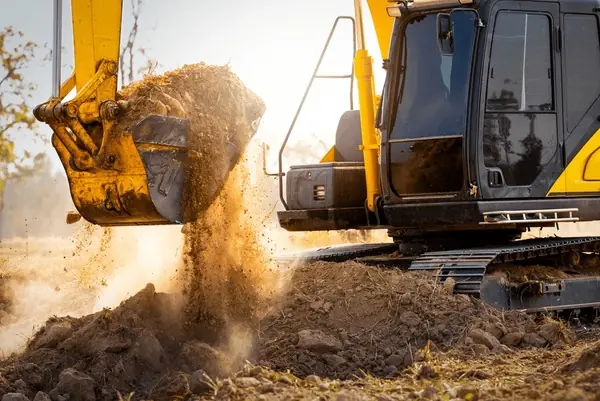
Site preparation and excavation work in progress. DZ Contracting handles everything from the initial dig through final grading and cleanup.
Indiana law requires that Indiana 811 be contacted at least two full business days before any excavation begins. This is not optional — it is required by Indiana Code 8-1-26 and applies to every digging project, from planting a fence post to excavating a foundation. The service is free. Utility companies will mark the location of underground gas lines, electric, water, telecom, and sewer so they can be avoided during excavation.
DZ Contracting submits an 811 locate request on every project before equipment arrives on site. But as a homeowner, it's worth confirming that your contractor has done this. Ask for the ticket number. If a contractor starts digging without a utility locate, you're exposed to risk — both the liability for damage to underground lines and any service outages that result.
In Kosciusko County's rural areas especially, unmarked private utility lines — lines that 811 does not cover — are also a concern. Private lines to outbuildings, irrigation systems, and older homesteads may not show up in the 811 system. A thorough contractor will ask about these before digging and may recommend private locating services for properties where there's uncertainty.
Questions to Ask Before You Hire
An excavation project is a significant investment. Here are the questions worth asking any contractor before you sign a contract:
- "Will you visit the site before giving me a quote?" Any legitimate excavation contractor will need to see the property in person. A phone quote for excavation work is not a real quote.
- "What's included in this estimate — and what's not?" Ask specifically about dirt hauling, backfill material, final grading, cleanup, and permit fees. These are the most common sources of surprise charges on excavation projects.
- "Are you licensed, bonded, and insured?" Ask for proof of general liability insurance and confirm it covers work on your property. For septic work, your contractor should hold the appropriate state licensure through the Indiana State Department of Health.
- "Will you handle the 811 utility locate?" The answer should be yes, and they should be able to tell you how far in advance they submit the request.
- "Who handles the permits, and are they included in the quote?" Permits should be a known cost going in. If they're excluded from the estimate, get a separate dollar figure for them so there are no surprises.
- "How do you handle unexpected site conditions?" Hard rock, buried debris, unexpected utility lines, or unstable soil can all change a project's scope. A quality contractor will have a clear process for communicating and getting approval before costs increase.
- "What does your cleanup and site restoration look like?" Ask specifically what the property will look like when they leave. Will the site be graded? Will tire tracks be addressed? What happens to excess material?
Red Flags That Cost You Later
Most excavation problems on residential projects are preventable. Here's what to watch for when evaluating contractors in the Warsaw area:
Vague or Verbal Estimates
Any contractor unwilling to put their scope and price in writing is leaving room to add costs after the job is underway. A written estimate should specify the work to be done, the equipment to be used, what's included and excluded, the payment schedule, and the timeline. If you can't get it in writing, keep looking.
No Site Visit
Excavation cost depends heavily on soil type, access, depth, and site conditions that cannot be assessed from a description over the phone. A contractor who quotes without visiting is guessing, and that guess will either be too high to win your business or too low to be honored once the real conditions become clear.
Large Upfront Cash Payment
A deposit is normal for excavation work. 10% to 30% upfront is reasonable for most residential projects. Requests for 50% or more before equipment even arrives — especially in cash — are a warning sign.
No Mention of Permits or 811
If a contractor doesn't bring up permits or the utility locate requirement for a project that clearly requires both, that's a contractor who either doesn't know the rules or doesn't intend to follow them. Either way, the liability for unpermitted work and utility damage lands on you as the property owner.
Poor Final Grading and Site Cleanup
The last 5% of an excavation project — the final grade, the topsoil restoration, the cleanup of tire ruts and disturbed areas — is where some contractors mentally check out once they've been paid. Ask about this before work starts, and make it a condition of final payment that the site meets your agreed-upon standard before the last check is written.
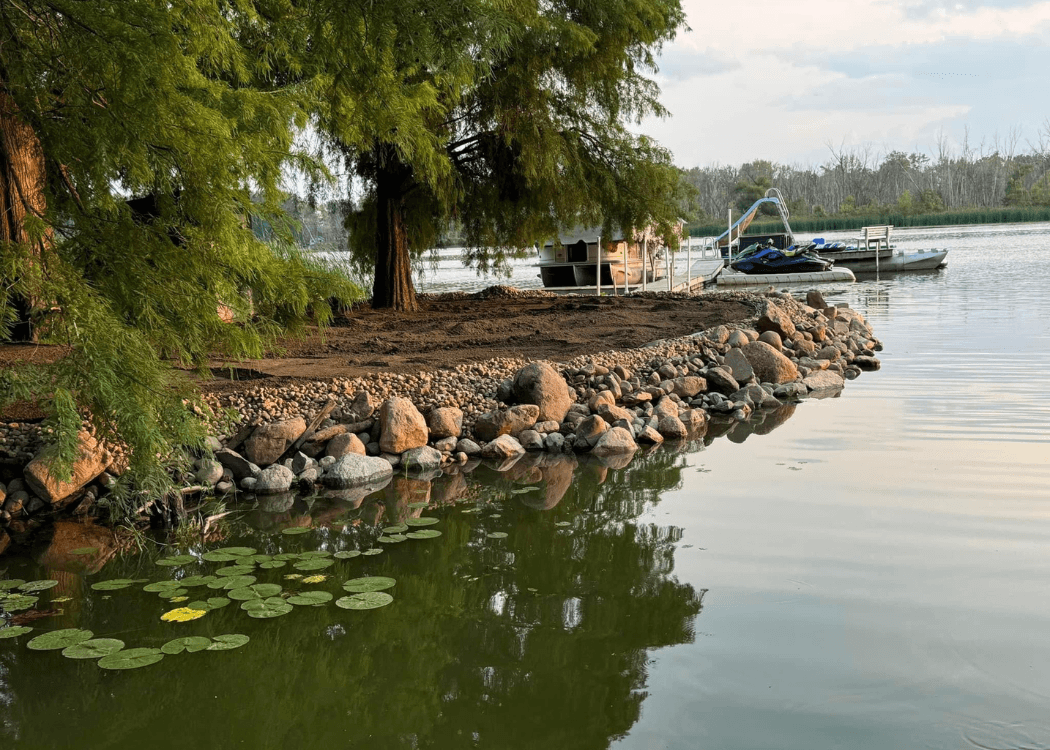
Completed excavation and site work project by DZ Contracting in Northeast Indiana.
DZ Contracting in Warsaw and Kosciusko County
DZ Contracting is based in Columbia City and regularly serves homeowners and property owners throughout Warsaw and Kosciusko County. We handle the full range of excavation and demolition work common in this area — from new home site prep and building pad excavation to pond construction, septic installation, and structure removal.
We're a crew that does what we say we're going to do, shows up on time, handles the utility locates and permits correctly, and leaves a site cleaner than we found it. That's not marketing language — it's the standard that earns repeat business and referrals in a county where everyone knows everyone.
If you have a project in Warsaw, Winona Lake, Syracuse, Leesburg, or anywhere else in Kosciusko County, we're happy to come out, take a look, and give you a straight quote. No pressure, no obligation.
Call or text us at (260) 515-1300, or request a free estimate online and we'll get back to you fast.